Automated trading is often described as a simple chain: a signal appears, a webhook is sent, and a broker receives an order. For clean TradingView strategies, that chain can work well. The alert is already structured, the ticker is known, the side is clear, and the message can be written in JSON. In that world, tools such as TradersPost have a clear role. They help traders connect structured alerts to supported broker accounts and automate execution without rebuilding the whole infrastructure from zero.
But not every trading signal starts as clean JSON.
A large part of retail and prop trading still lives inside Telegram channels, private groups, Discord rooms, screenshots, forwarded messages, and human-written trade calls. A trader may see something like “Gold buy zone 2331-2334, SL 2324, TP1 2342, TP2 2350” or a screenshot with an entry, stop loss, and several targets. Sometimes the signal comes with emojis. Sometimes it is edited after two minutes. Sometimes the admin posts “move SL to entry” as a separate message. This is not the same problem as sending a ready TradingView webhook to a broker.
That is the real difference between AlgoWay Vision and a standard webhook-first automation tool.
A webhook tool expects the signal to be already prepared for the machine. AlgoWay Vision is built around the messy stage before that: reading, understanding, and converting real trading instructions into an executable format. That makes AlgoWay a practical TradersPost alternative for traders whose signals do not always begin inside TradingView.
The Telegram signal copier side is especially important. Many traders do not write Pine Script. They do not manage strategy alerts. They follow analysts, paid signal rooms, prop firm groups, channels, or private Telegram communities. Their main problem is not “how do I write a webhook JSON?” Their problem is “how do I take this signal from Telegram and execute it correctly without sitting in front of the screen all day?”
That is where a dedicated Telegram signal copier becomes a different category of tool.
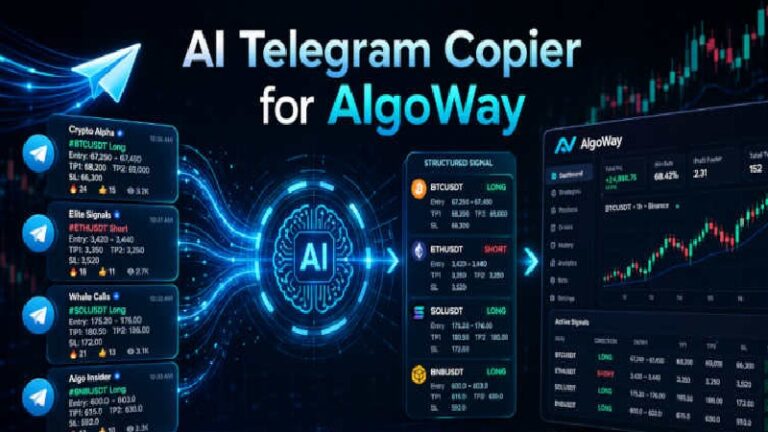
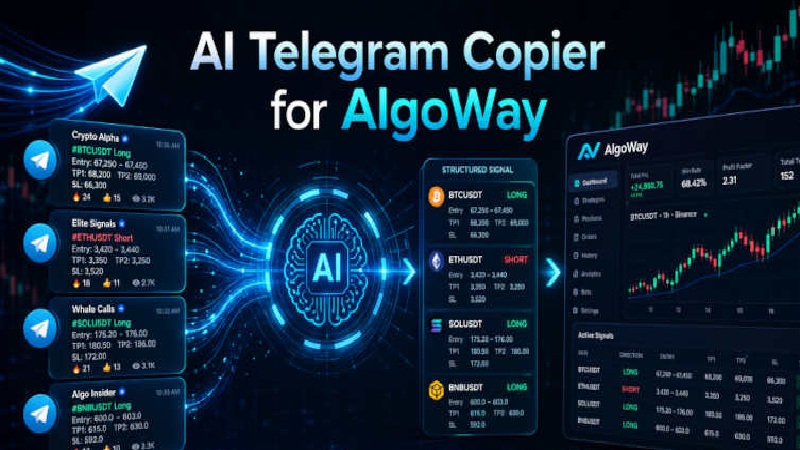
The difference is not only technical. It changes the workflow. With a pure webhook setup, the trader must build the signal logic first, then format the message, then test the payload, then connect the broker. With Telegram-based automation, the signal already exists somewhere else. The system has to extract intent from text or image, understand the symbol, direction, entry, stop loss, take profit levels, volume rules, and then send the trade to the selected platform.
This matters because Telegram signals are rarely written in one universal format. One provider may write “BUY XAUUSD now”. Another may write “long gold from 2330”. A channel may use BTCUSDT, BTC/USDT, Bit-coin, or simply BTC. Some signals use entry zones. Some use market entry. Some split take profit into multiple levels. Some send updates after the original signal. A system that only waits for perfect JSON misses the reality of how many traders actually receive trade ideas.
Read More: Charles Spinelli Talks About How Workers’ Compensation Insurance Work
AlgoWay Vision tries to bridge that gap. It is not only an execution bridge. It is a conversion layer between human signal language and machine execution. That includes Telegram text signals, visual signals, webhook payloads, and TradingView alerts. The goal is to let the trader keep using the signal source they already trust, while AlgoWay handles the translation into a broker-ready action.
This does not make TradersPost useless. For traders with clean TradingView strategies and supported broker connections, a structured webhook workflow can be enough. It is controlled, predictable, and easy to audit. The user defines the exact alert message, and the automation platform follows that instruction.
AlgoWay Vision solves a different pain. It is for traders who need automation across less structured sources. Telegram signals, screenshots, mixed message formats, and signal-copy workflows create problems that cannot be solved only by adding another webhook URL. The input itself has to be understood first.
That is also why comparing the two platforms only by broker list or webhook speed misses the bigger point. Execution is only the last part of the chain. Before execution, the system must know what the trade actually means. In TradingView, that meaning is usually created by the script. In Telegram, the meaning is buried inside a human message. AlgoWay Vision focuses on that earlier step.
For signal providers, this can also be useful. A provider can keep publishing signals in a normal human format instead of forcing every subscriber to build scripts, edit JSON, or manually copy trades. For subscribers, it reduces the delay between reading a signal and placing the order. For traders managing multiple accounts or platforms, it keeps the workflow centralized.
The market is moving beyond one-source automation. Traders use TradingView, Telegram, exchanges, prop firm platforms, MetaTrader, cTrader, MatchTrader, TradeLocker, DxTrade, crypt futures, and broker APIs. The signal can come from one place, while execution may happen somewhere completely different. That is the environment AlgoWay is being built for.
Read More: How to Develop a Winning Franchise Marketing Strategy
So the key difference is simple: TradersPost is mainly about taking structured trading signals and routing them into execution. AlgoWay Vision is about making more types of signals usable for automation, especially Telegram and visual trading signals that were never designed as clean webhook messages.
For traders who already have perfect TradingView alerts, the choice may be straightforward. For traders who receive signals from Telegram
About the Author